Tuesday, 27 September 2011

Documentary Commission Unit: Project Update

I am now working with Jane & Hennie on a documentary with the working title "Leaving Home".

This documentary will look into the story of Christine and Norman Mundell, a couple who left South Africa in the early noughties following the reversal of apartheid. It is a personal story, told through interviews and archive footage, of the journey the characters took after losing their farm during a financial crisis and making the tough decision to start a new life in the U.K.


Follow our blog:    leaving-home-uca.blogspot.com

Documentary Commission Unit: Idea Development

“The Noughties - A MySpace Generation”

Pitch

The way in which we discover, purchase and listen to music has altered dramatically in the past decade. We saw the introduction of social networking and digital downloads.

My unique selling point is the story of a band called “My Last Mistake”. A band which was directly affected by the social-networking site MySpace during the noughties. Through being able to upload songs, the lead singer, Leah Newcombe, gained popularity in the UK and overseas. As a result, she signed a publishing deal with Universal and went on to sell copies of her E.P online and has received over 4.7 million plays on MySpace (information found on MySpace).

I want to interview an industry expert to demonstrate how the industry has changed where music has become so easily available for free. In 2008, the largest academic survey of young people’s music ownership found that teenagers and students have an average of more than 800 illegally copied songs each on their digital music players as a result of file-sharing from websites such as Napster, Limewire and Pirate Bay (University of Hertfordshire).

And, I also want to talk to the public in a sequence to show how their habits have changed and how they have become used to new technologies offering personalisation, on-demand content and portability. Ultimately, I would have explored the positives and negatives of file-sharing for the artist, the industry and the consumer.

I plan on building up to a gig for My Last Mistake, highlighting conflicts along the way. With the aid of a narrator and archive footage of popular bands, such as Lily Allen, who have used the internet to become successful and footage of My Last Mistake and social-networking sites. The audience will also understand the struggles artists face against TV Talent Shows such as The X Factor, which dominates the music charts.

This film should be commissioned because its new, informative, exciting, stylish and the characters are unique and interesting. I have worked closely with musicians and was one of many young people flooding MySpace, Facebook and other social-networking sites. I have a passion for music discovery and watching talented musicians fight into a tough industry.

Documentary Commission Unit: Idea Development

“The Noughties - A MySpace Generation”

Treatment

During the noughties we saw the introduction of social networking and digital downloads. the way in which we discover, purchase and listen to music has altered dramatically in the past decade.

Set in Maidstone, the general public will be approached one by one in a sequence down a busy high street and asked questions relating to their music buying habits: how do they discover music and where do they get it from. I hope to demonstrate how the consumer has changed and the variations between different generations. I expect to find that audiences have become used to new technologies offering personalisation, on-demand content and portability. They have become more selective in what they listen to from services such as iTunes; launched in 2003.

I want to guide the audience through the decade with a narrator and archive footage of popular bands who have gained success through social networking: for example, Lily Allen, Arctic Monkeys and Kate Nash. I want to compare and contrast these acts with a local band to show to upside and the downside to social networking and digital downloads in the noughties.

The town of Maidstone, full of lively pubs and bars, is where you will find my central characters: a band called My Last Mistake. I plan on introducing them by hearing their music play non-diegetic in one scene before cutting to a live music sequence of them playing the song diegetic in a new scene. We will interview the lead singer, Leah Newcombe, in her home subjectively, and show archive footage of the band in the early stages and find out how she felt at the time, what she planned for the future, how MySpace helped her and the struggles she faced as an artist.

In the noughties, Leah started the band as a solo act, just herself and a guitar. Through uploading her songs to MySpace , a social-networking site, she became a hit with the young music scene, the “emo”, particularly in the U.S.. Because of her popularity, she was discovered by Universal and signed a publishing deal with them; She released her debut album (recorded and produced by the same people who worked with “Alexisonfire”) and sold over 5,000 copies of her E.P. through MySpace. In just over a year alone, she had over 4.7 million plays on MySpace. At the time, she had planned a tour of U.S. and Canada during 2009. She added two more band members: Amber on drums and Richard on guitar. We see how My Last Mistake were in the right place at the right time: on MySpace, where a revolution was happening.

An industry expert, such as a university lecturer or a writer, is interviewed in their place of work to inform the audience how the industry has changed and how it faced a period of file-sharing. In 2008, the largest academic survey of young people’s music ownership found that teenagers and students have an average of more than 800 illegally copied songs each on their digital music players as a result of file sharing websites such as Napster, Limewire and Pirate Bay. I will look back at the interviews with the public to discover where their music came from on their music players and whether they own songs from such websites.

Using facts and figures, the expert will show how music sales have been falling steadily; therefore, large companies became desperate to promote subscription-based agreements, whereby the user pays a monthly fee for music, rather than rely on one-off CD and download sales. For example, record labels EMI and Warner Music together launched the Datz Music Lounge in 2008, subscribers could access unlimited songs for a year and keep all the songs they download forever for £99.99.

These are the conflicts artists face, music had become so easily available for free. I plan on filming My Last Mistake, on location in a studio and provoking them in a cinema verite style to share their personal views on the subject and reveal any tensions they have. An issue they will talk about is the increasing amount of artists swarming the internet on networking sites, and it becomes more difficult to stand out. They will also talk about the end of MySpace and the move to Facebook as it became more popular in 2008. We explore how the band use the internet as a promotional tool and how bands are forced to give away tracks for free so they are open to viral and peer-to-peer marketing from file-sharing. The downside for artists is the costs and time of producing a song to be given away freely. Some indie bands embrace file-sharing as a tool for great exposure as opposed to anti-piracy artists such as Prince and Metallica. I will explore the stance My Last Mistake takes on the subject and possibly bring in the previous interviews with the public on their views.

Leah now works in website graphic design, a skill she found when designing her MySpace page. She has completed courses in Modern and Contemporary Music and Professional Musicianship. As we reach a climax, we follow My Last Mistake to a gig, where they play once more. A threat to the character’s journey is to experience an unsuccessful gig, highlighting the tough times of the music industry and promotion difficulties online trying to grab people’s attention. There is an opportunity to provoke the band to talk to local people at the venue and observe their conversations and reactions to tell the story. Or, the night could be a success and a turning point for the central characters, they have taken a journey and their motives for the future have changed.

Ultimately, I aim to inform a wide audience of the Yesterday channel the important changes that have occurred in the past decade in the music industry with social networking. I want the audience to reminisce and to look forward and understand the industry in a different light. I want them to understand the struggles artists face against TV Talent Shows such as  The X Factor, which dominates the music charts.

This film should be commissioned because it’s new, informative, exciting, stylish and the characters are interesting, original and a unique selling point for the documentary. I have worked closely with musicians and was one of the many young people flooding MySpace, Facebook and social networking sites and exploring their uses; I was also finding and buying music online. I have a passion for music discovery and watching talented musicians fight into a tough industry to be noticed and successful.

Direction Unit: Idea Development

Using Final Cut Pro I can change the colour temperature using the colour balance tool in the image control menu in effects.

Before
After

Direction Unit: Idea Development

I went back to my planned locations with a Sony camera to test the gain and lighting and to try out some angles for when I plan my shooting script.

Saturday, 24 September 2011

Documentary Commission Unit: Research

Background research into bands who got success with the help of MySpace and the internet during the 00's

Kate Nash  started her career, did gigs and uploaded her music to MySpace, found a manager and seeked producers. Her debut single was “Caroline’s a Victim”. Produced and recorded in Iceland and released in 2007, only 1000 copies on 7” vinyl. Another 1,000 were made and sold out. CD-promo copies were produced for press and DJ’s etc. And sometimes for sale.

Lily Allen  signed to Regal Recordings in 2005, they gave her £25,000 to produce an album, they were distracted at the time with other artists. She created an account on MySpace and began posting demos. They attracted thousands of listeners, and 500 limited edition 7” vinyl singles were rush released. She accumulated thousands of MySpace friends the Observer music monthly took interest in 2006. She received her first major mainstream coverage, appearing in the magazine’s cover story two months later.

Arctic Monkeys  formed in 2002. One of first acts to come to the public attention via the internet (fan-based sites rather than from the band). With commentators suggesting they represented the possibility of a change in the way inn which new bands are promoted and marketed. They burned CD’s with 17 songs to give away at gigs, which were promptly file-shared amongst fans. They didn’t mind the distribution, saying “we never made those demos to make money or anything. We were giving them away free anyway - that was a better way for people to hear them”. They didn’t even know at the time how to get their songs onto the internet. They were unaware what MySpace was, the site was created by their fans.

Sean Kingston  was discovered though MySpace by Tommy Rotem at Beluga Height, and signed to the label in a partnership deal with Sony in 2007

Panic! At the Disco  formed in 2004. Began in Las Vegas and never played a live gig. They posted three early demos on PureVolume. They sent a link to Fall Out Boy bassist Pete Wentz via a LiveJournal account. He drove to Las Vegas to meet with the band and signed them to his new label Decaydance Records, 2004. He then promoted the band. 

Colby Caillat  auditioned for American Idol but was rejected at the pre-audition stage and was unable to sing for the judges. The seconds time she auditioned for the show, she sang her own song, “Bubbly” and was rejected once again. The popularity of her MySpace profile led her to become the number one unsigned singer in her genre for four consecutive months. Her debut album was released in 2007.

Soulja Boy  posted his songs on the website SoundClick in 2005. Following positive reviews on the site, he then established his own web pages on YouTube and MySpace. In March 2007, he recorded “Crank That” and released his first independent album, followed by a low-budget video filmed demonstratiing the “Crank That” dance. He then went on to sign a deal with Interscope Records.

Documentary Commission Unit: Research

Facebook Music comes out with all guns blazing
Friday September 23, 2011
By Eamonn Forde  

An article on Music Week which talks about how Facebook is advancing in a way to integrate music more in the site, whilst thinking about interactivity and discovery for the user. Here are some key points I found:

  • Facebook is arguable the second biggest digital platform for music after YouTube. 
  • Facebook CEO Mark Zuckerberg defined the changes as going far beyond ‘Likes’ and pushing users towards greater discovery and interaction with both content and other users.
  • Deezer CEO Axel Dauchez said, “This is a revolution for music fans who will be able to seamlessly share their tastes with friends when they’re listening to music on Deezer, and discover new artists within a huge universe of music. Deezer is thrilled to play a major role in this exciting evolution.”
  • Vevo president and CEO Rio Caraeff said, “A deeper integration with Facebook will help Vevo grow its scale and reach to new heights, while better targeting our connected, socially-savvy audience. As the only music video partner announced today, Vevo has a unique opportunity to work with the world’s leading social networking platform and build a true music video experience that is more expressive for the fan.”

Friday, 23 September 2011

Direction Unit: Idea Development

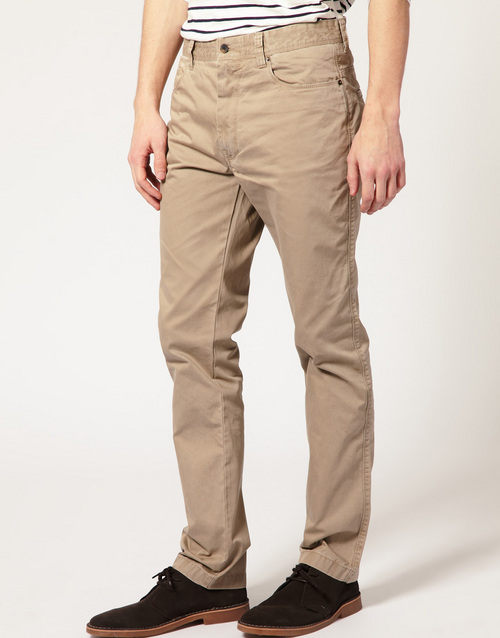
Costume

I've been thinking about what the character would wear for Dexter. I think he'd wear quite plain tight-fitted clothes with an edge. He also has the ability to dress smarter, but in the scene I am covering, he needs to dress appropriately for a kill, military style:

Wednesday, 21 September 2011

Documentary Commission Unit: Research


I have decided to concentrate on the "MySpace Generation". As part of this I have conducted some background research into the MySpace website. Here's a quick time-line of the most important events:

2002  eUniversal employees with accounts on a networking site called "Friendster" saw it's potential and decided to mimic it.

2003  MySpace was ready to launch, overseen by the eUniverse founder, Brad Greenspan, and managed by Chris DeWolfe, MySpace's starting CEO. Employees of eUniverse were the first MySpace users. 

2005  Bought in July for US $580 million by Rupert Murdoch of News Corporation. 
Launched MySpace Records, a new label to discover unknown talent on MySpace music.

2006  Fox announced plans to launch a UK version in a bid to "tap into the UK music scene". It also launched in China. It began to see a strong audience of teenagers. In August, the 100 millionth account was created in Netherlands.

2007  MySpace and Bebo joined a Google led Open Social Alliance alongside Friendster, Hi5, LinkedIn, Pluxo, Ning, SixApart. Facebook remained independent. MySpace was considered the leading social networking site, valued at $12 billion. Launch of MySpace Transmissions, a series of downloadable studio recordings of well-known artists such as James Blunt. MySpace TV, video sharing was made available.

2008  April, Facebook overtook MySpace based on monthly unique visitors, mainly college students. Music page was redesigned with new features.

2010  You were no longer able to listen to full songs, they were replaced with 30-second samples. Other songs were suggested to the user to help in music discovery.

2011  March, it lost 10 million users between January and February and lost advertising long-term deals. In February, the site was put up for sale, estimated worth $50-200 million. On June 29th, it was sold to Specific Media for $35 million plus a 5% stake in Specific Media, Justin Timberlake also took a small stake.

Documentary Commission Unit: Research

I looked at newspaper articles to find story inspiration and relevant conflicts surrounding the events during the noughties...

In relation to feminism and how women have changed over the noughties; they have become more self-aware to an extreme in terms of dieting, surgery, botox. Some influential people include Katie Price (a.k.a Jordon), known for her cup size due to extensive plastic surgery. Tabloid newspapers began to indulge in celebrity couples and the WAG (wives and girlfriends of sportsmen) appeared; suddenly, women had a new lifestyle to idealise.  


Technology has changed dramatically in the last decade, we now have faster broadband, high-tech gadgets, iphones, apps, macs, ipods, ipads; with the emphasis on interactivity and user access. But is it always guaranteed? And should it be relying upon? In some circumstances it could be doing more harm than good.


Then there was the development and discovery of social networking. A new and exciting method of keeping in touch with old friends, colleagues and relatives around the globe. It also became a tool for those looking for contacts and to promote themselves, ie. if you were a musician. MySpace allowed for unsigned artists to upload their songs and share their talents to the rest of the world. However, the internet also allowed music to be available so freely that it damaged the industry and has shaped the way we view music today. 


Documentary Commission Unit: Idea Development

I created some mind maps from my 3 ideas in relation to the "noughties". 
These are:
  • Technology in the home/school/in businesses
  • The Internet - a MySpace Generation
  • Feminism - "ladette" culture

Monday, 19 September 2011

Documentary Commission Unit: Idea Development

Project Brief

For this unit, we are to develop, design and create a 10-minute documentary, working title "The Noughties", to be transmitted at 7.30pm on UKTV History channel Yesterday. I will be making a critical pitch of my idea to commissioning professionals and a 'viral marketing' campaign will be developed to accompany the production. Opportunities for audience 'interactivity' are an important element. I will be keeping an online blog with the group in which I will be working with that will cover the development of the whole production from conception through to screening. It will include plans with how to engage a wider audience beyond the completed production. 

For the development and production of the idea, the Yesterday channel brand must be kept in mind to produce something serious and factual to engage a diverse audience with contemporary history. With my ideas, I seek to inspire a new audience to look at history and identify as well as reminisce and be informed by what they see. I will also be aware of the uses of new media and multi-platform applications and to explore new ideas within these in the aim of promoting the programme.

I need to be aware of the following issues:
  • Consider the specific themes as above
  • Duration, transmission time, channel, audience
  • Funding - sponsorship? (think about the channel's audience)
  • Treatment - format, style, mechanisms?
  • Shooting script - sequences, set ups, actuality, interviews, in a creative way
  • Viability - film must be deliverable within the specific time frame

Direction Unit: Idea Development


Took some photos to test the temperature of street lighting at night. Ideally I want to avoid the "yellow" street light as it's not the tone I want and its more unflattering. When looking for locations, I look for floodlight type lighting, a bright white light, to give: an even colour balance when shooting, to provide a good amount of light and to create a colder colour temperature to reflect the tone. Some shop lighting I will look out for can offer an interesting type of light, especially useful for even side lighting as opposed to street lighting above the subject producing harsh shadows. After my research I have considered using reflectors during my shoot to get the best out of the available light I'll have.

Direction Unit: Research

Character Profile

Dexter Morgan
 
Age: 30-40 years old
Job title: Forensics expert and blood splatter analyst at Miami Metro Police Department

Dexter, as a young boy, witnessed the murder of his mother and was left for two days in a shipping container filled with blood. He was adopted by Harry Morgan, a detective from Miami Metro Homicide, who found that Dexter had an ongoing urge to kill. Harry took it upon himself to teach Dexter a "code" so he would be able to satisfy his urges and kill those who deserved it without getting caught. 

Dexter considers himself to be emotionally withdrawn from the rest of humanity, he doesn't understand "humans" and their desires or normal relationships with others. He often feels empty inside and the only way he is able to feel alive is to carry out a satisfying kill. He interacts with humans using a well-rehearsed act to conceal his true nature. 

Despite his "dark passenger", he is incredibly loyal to his family, particularly to his deceased father Harry. He has a sister, Debra (Harry's biological daughter), who he would never harm or tell her his secret. 

His traits include being responsible, always paying bills, taking one holiday off work a year, always being on time and always answering his phone. He has a clean record and is neat and organised, especially whilst carrying out a kill and always following Harry's code by leaving no evidence at the scene and being careful. His speech tends to be monotone and when caught off-guard, he verbally stumbles. he can be quite awkward, unable to read social cues. He possesses and inner voice, his "dark passenger", and tends to hallucinate seeing Harry under high stress situations. He becomes perplexed by boisterous socialising and buddy behaviour, such as going out and partying with his workmates. He is usually self-sufficient and uncomfortable relying on others for anything, but he can also be a pushover and non-assertive when asked to do something by others.

Michael C. Hall, who plays Dexter, had an interview on Jonathan Ross's show. He talks about Dexter, the character, and how he works to portray him by practising and feeling what it's like to "stalk people" and other methods.


Here's a scene from the first season. Dexter headbutts Sgt. Doakes, a detective working in the same department, who has suspicions over Dexter and gives him the creeps. This shows Dexter's violent, mental side and how he can act and appear normal to everyone else that they feel sympathy for him when Doakes attacks him. It shows how Dexter knows how he appears to everyone else and his ability to twist a situation.

Direction Unit: Research

At the beginning of summer I filmed a music video for acoustic singer/songwriter Fred Clark. I used my own DSLR using the HD video mode and shot multiple takes of the performance of his song "Superhero" in different camera angles and framing, then edited the shots together.  We had speakers on the day so he could mime to the recorded track and so the footage was in sync during editing. In editing, I found that you can't always cut to the shot you want because every time he did a take of the performance, his movements were always different so they wouldn't always match up. I plan to film more music videos, possibly after this semester, using different methods.


My inspiration for music video production at the moment are Mickey Smith & Owen Tozer, who direct videos for a musician I saw over the summer called Ben Howard. Mickey Smith is an amazing surf photographer (www.mickeysmith.co.uk, thedeadaredyingofthirst.blogspot.com). More beautiful videos can be found at www.youtube.com/user/benhowardmusic, some are really simple and effected, mainly filmed outside rather than in a studio.


Wednesday, 14 September 2011

Direction Unit: Idea Development

I went out and about Maidstone as a possible location for my Dexter drama. I wanted to find a gritty back-alley type street with terrace housing and shop/restaurant/take-away/pub buildings. I was also thinking about where my light sources would be as I'd be filming the scene at night and the location needs to tie-in with the script. One of Dexter's lines in the original script is:
 
"Miami is a great town. I love the cuban food. Pork sandwiches, my favourite."

So ideally, I want to find a take-away or pub down a street where Dexter is driving/walking to help establish the setting and anchor what is written in the script. It will also offer me another available light source when filming.
 
On top of a motorway bridge

I also plan to find a location which looks secluded in the woods (preferably with an abandoned building) or an empty, open car park (or a secluded multi-story), as that's where Dexter will end up.